
Mango, a large evergreen tree (mangifera indica) is a native of the Indian subcontinent. It now grows in many parts of the world. The fruit, leaves and the bark of mango tree all have nutraceutical properties. Let’s explore its exceptional nutritional aspects.

The moment you spot a mango on a tree, you know summer has arrived. Mangoes, like jasmine flowers, is a quintessential Indian summer flavour.
Unripe mango
Unripe ones are sour due to the presence of many organic acids like citric acid, glycolic acid, malic acid, tartaric acid and oxalic acids. It is rich in vitamin C and can contain up to 80 mg / 100g .
They contain starch and structural carbohydrates (fibres) like pectin and cellulose.
Unripe mango is used for making pickles and chutneys. Mango sprinkled with salt and chilli powder is a tangy summer snack across the Indian sub continent.
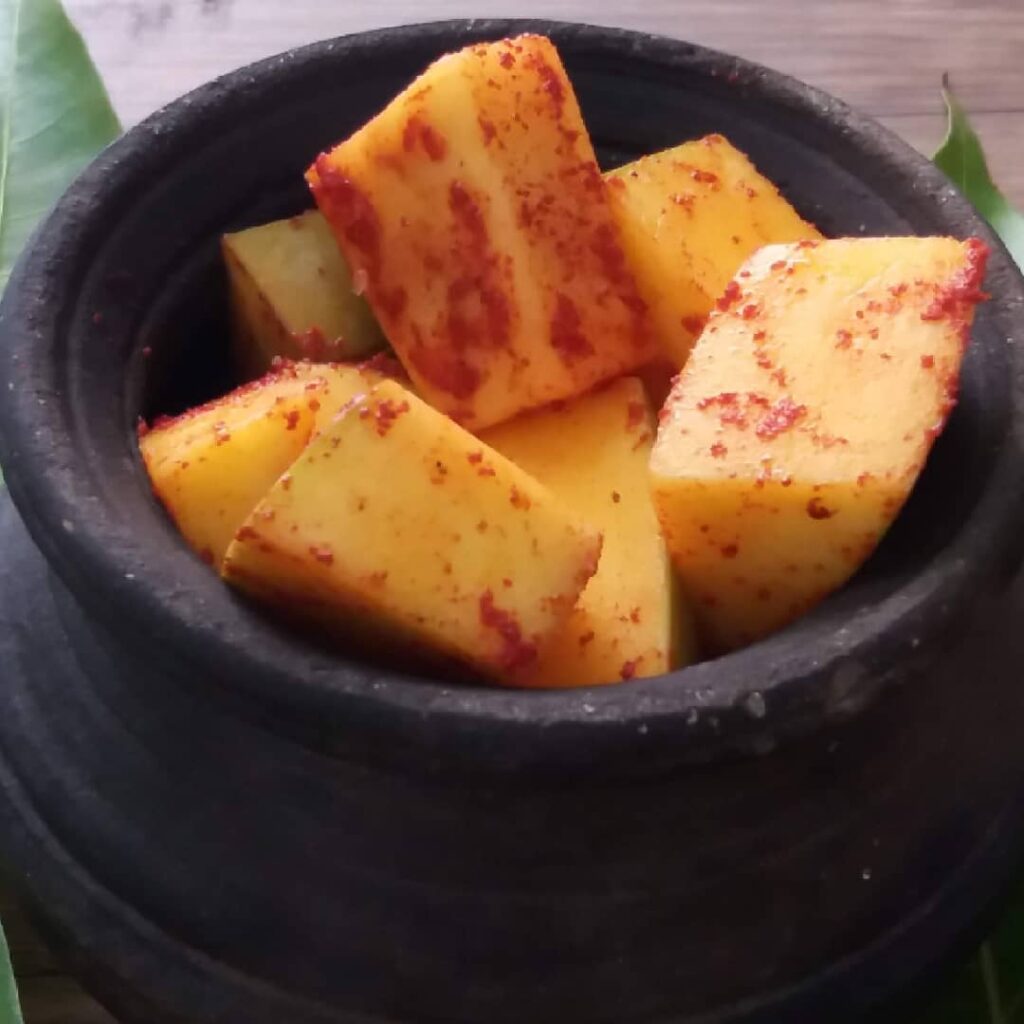
Pickling
Like the kimchi making process in Korea, making mango pickle in India during summer is an annual fare. This is the time when the senior ladies of the household become busy getting the spices ready and sterilizing the jars. They go into “a meditative mode” during the pickling process as much devotion and precautions go into it. Children are not allowed to play in the area. Wet hands and even the sound of dripping water is enough to put the ladies on a “hypervigilant mode”.

Mature, unripe green mangoes, salt, spices and oil are used for making traditional pickle. The mangoes are cut into smaller pieces of precise size and shape with dry and clean hands.
They are placed in a jar and mixed generouly with salt. The mixture is dried under the sun for a week or so, carefully covered with plain white cloth (Usually with old dhoties preserved for this purpose). Spices are added to the glass jar and a layer of oil is added to it .
During the pickling process, controlled fermentation occurs. Oil and salt prevent unwanted bacteria from multiplying . Fermentation makes the pickle acidic and does not allow the bad bacteria to thrive.
What happens during the ripening process?
Mango is a climacteric fruit. It means, it continues to ripen even after plucking from the tree like bananas. It emits ethylene gas during the process. So, if you want the mangoes to ripen quickly, all you have to do is to put them in a closed container to concentrate the gas.
During ripening, acid content reduces and the starch converts to sucrose, glucose fructose. A fully ripe mango is thus very sweet to taste. Pectin content decreases considerably.
The vitamin C content decreases relatively, but there is a significant increase in provitamin A , moderate increase of Vitamin B1 and B2 and vitamin E.
Ripe mango
The unique peachy flavour of a ripe mango is due to the lactones. Organic acids, monoterpenes, carbohydrates, fatty acids also contribute to the flavour.
Mangoes contain substantial amount of bioactive polyphenols which are responsible for the antioxidant properties of the fruit.
Mangiferin, the hallmark polyphenol present in mango, is a potent antioxidant and an immune modulator. It act as a cardiotonic, heals wounds and prevents tissue degeneration. It protects the gastric mucosal lining and prevents ulcers.
The colour is due to the presence of pigments like chlorophyll, carotenes, anthocyanins and xanthophylls.
Mangoes are rich in pro vitamin A carotenoids like beta-carotene and beta cryptoxanthin. Apart from these, there are other carotenoids like lutein and lycopene. They play a vital role in preventing macular degeneration.Macula is an area in the central retina responsible for sharp and clear vision. They also have anti cancer properties.
Carotenoids are major defense systems of the skin. They are absorbed in the intestine and reach the outer layer of the skin via blood circulation and sweat glands. These carotenoids protect the skin from the assaults of UV radiation and pollutants . Skin with less carotene content tends to age faster.
Despite the decrease in vitamin C content during ripening process, they are good sources of vitamin C ( 40mg/100g ). So, one medium sized mango can satisfy a day’s requirement.
| Men | 90mg |
| Women | 75mg |
They are excellent sources of pro vitamin A . Vitamin E and K are present in minor quantities. All three vitamins have antioxidant properties.
Mangoes are good source of the water soluble B vitamin folate. Adequate intake of folate is necessary before and during pregnancy to prevent neural tube defect in the child.
Mango leaves
In traditional Indian medicine, mango leaves are used for its antibacterial, antidiarrheal and wound healing properties. The leaves are always a part of Indian religious rituals and decoration during festivals.
What has science discovered about the leaves ?
The prime bioactive molecules of mango leaves are mangiferin, benzophenones,quercetin, flavonoids, phenolic acids and ascorbic acid.
Studies have confirmed the antidiabetic potential of mango leaves. Extract of mango leaves control blood sugar level by various mechanisms like preventing pancreatic damage, increasing glucose uptake by the cells, and blocking certain enzymes responsible for increasing the blood glucose level during carbohydrate digestion.
The leaves also possess excellent antioxidant, anti-inflammatory, anti obesity, anti viral and anti tumor properties.
Furthermore, mangiferin offers neuroprotection and significantly improves memory and learning. It also calms the mind.
Mango leaf extract also increases sports performance by improving brain oxygenation and muscle oxygenation. It decreases lactic acid formation in the muscles, decreases fatigue and exhaustion.
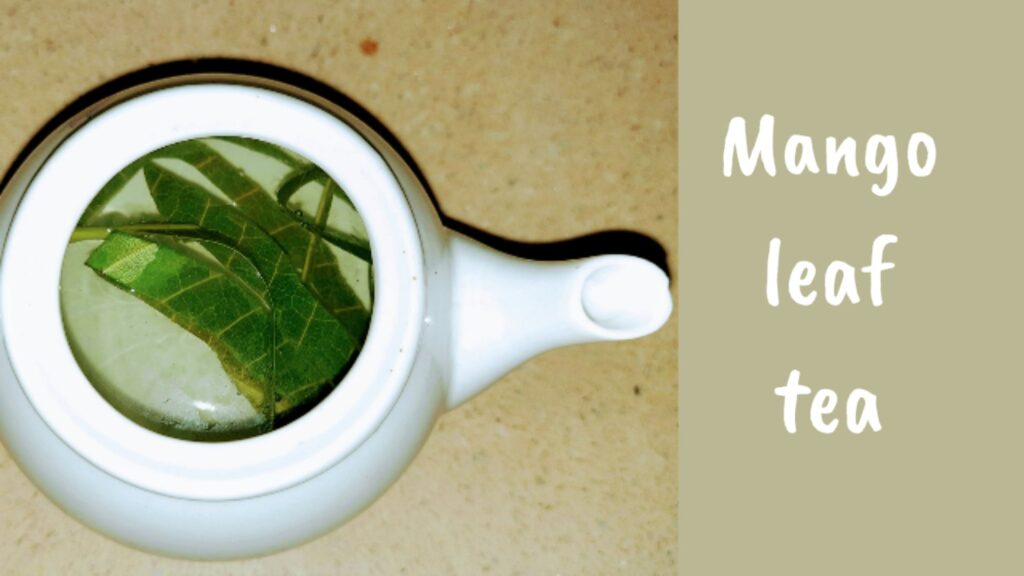
Mango leaf tea
Crush or cut fresh mango leaves, add to boiling water and let it simmer for 5 minutes. Refreshing mango leaf tea is ready!
Can diabetic patients eat mangoes?
Come summer, this is the question which occupies everyone’s thoughts. The glycemic index of mango is ~ 56. Glycemic index is number which indicates how much a carbohydrate rich food can increase your blood sugar level. High glycemic index means it increases the blood sugar level rapidly.
Controlling spikes in blood sugar level is important for both diabetic patients and for those who do not wish to become diabetic.
| Low | 1 – 55 |
| Moderate | 56 – 69 |
| High | >70 |
Mango has a glycemic index of 56. Even though a ripe mango contains sugar, it also contains moderate amount of dietary fibre which helps in controlling the spike in blood sugar. And hence, can be consumed moderately by diabetic patients.Since it is loaded with antioxidants and vitamins, it helps to control chronic inflammation prevalent in diabetic patients.
It is a good idea to eat mango as a part of your meal along with low glycemic food like green leafy vegetables and protein rich lentils and pulses. Fibre and protein regulate the absorption of sugar in the gut . This helps in controlling the blood sugar spike and the immediate drop in blood sugar levels.
Alternatively, one can have unripe mangoes which have much lower glycemic index or fibre rich mango varieties.
Yet another idea would be to consume mango leaf tea along as it known for its profound, scientifically proven, anti diabetic effect.
To enjoy guilt free eating of this calming, nourishing and cooling fruit, we can make ourselves worthy of it by improving our physical activity level and by restricting other simple carbohydrates in our diet. The point is not to miss eating these nutritious nature’s treat. Eating in moderation is the key.
The takeaway
On the whole, mango, a dessert by itself is a wonderful concoction of polyphenols,flavonoids and multiple vitamins. Everybody likes mango because of its sweetness, flavour and texture (And in that order!). Once you get to know the exceptional nutritional benefits, it cannot be foregone! (Now nutrition comes first!).