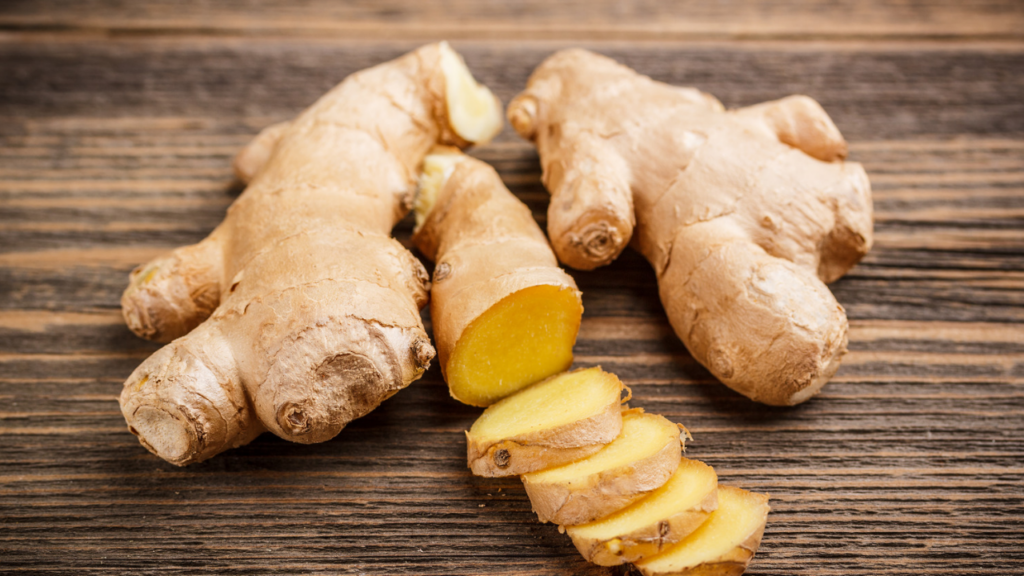
ginger
Ginger has a very long history of usage in many traditional medicines like Ayurveda , Chinese and Unani. Lets see what modern science has documented.
Ginger
Native to India , now cultivated throughout the world. The part of the plant used is the rhizome , the underground stem which grows horizontally. It is a perennial which is easy to cultivate .
| Botanical name | Zingiber officinale |
| Tamil | Inji, இஞ்சி |
| Malayalam | Inchi |
| Telugu | Allam |
| Kannada | sunthi |
| Hindi | Adrak |
| Sanskrit | Srngaveram |
| Korean | 생강 |
Ayurvedic perspective of Ginger
According to Ayurveda, Ginger is considered as “MAHA OUSHADI” which means Great Medicine. It primarily acts on the digestive system as an appetizer, carminative (which expels gas) and a digestive.It is used to treat nausea , vomiting, pain , fever , cough and respiratory illness.
It is one of the three ingredients in TRIKATU , the famous ayurvedic medicine containing ginger,black pepper and long pepper. Trikatu is used to enhance digestion and to control phlegm.
Most diseases occur due to poor digestive system
AYURVEDA
Ginger in Chinese medicine
Use of ginger has been documented as early as 4th century BC . Its used for treating stomachache, headache, nausea, toothache, rheumatic pain and respiratory illness.It is also used as cardiotonic and anti convulsant.
What does Ginger contain?
| Volatile oils | Non volatile oils |
| Aroma and taste | Pungency – hot sensation |
| Sesquiterpene | Gingerols |
| Zingiberene | Shogaols |
| Curcumene | Paradols |
| Farnesene | Zingerone etc |
Fresh vs Dried Ginger
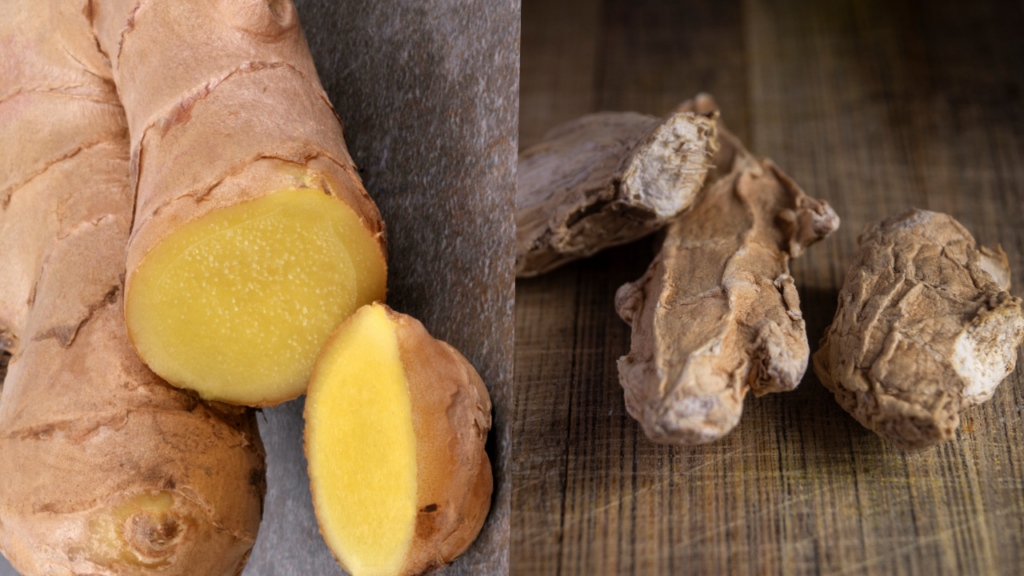
Fresh ginger contains both volatile and non volatile essential oils and hence has a balanced aroma , taste and pungency. Whereas, dried ginger is more pungent and sharp .This is because many volatile essential oils are lost during drying process.
How to include ginger in our diet?
- Condiment in cooking
- candy
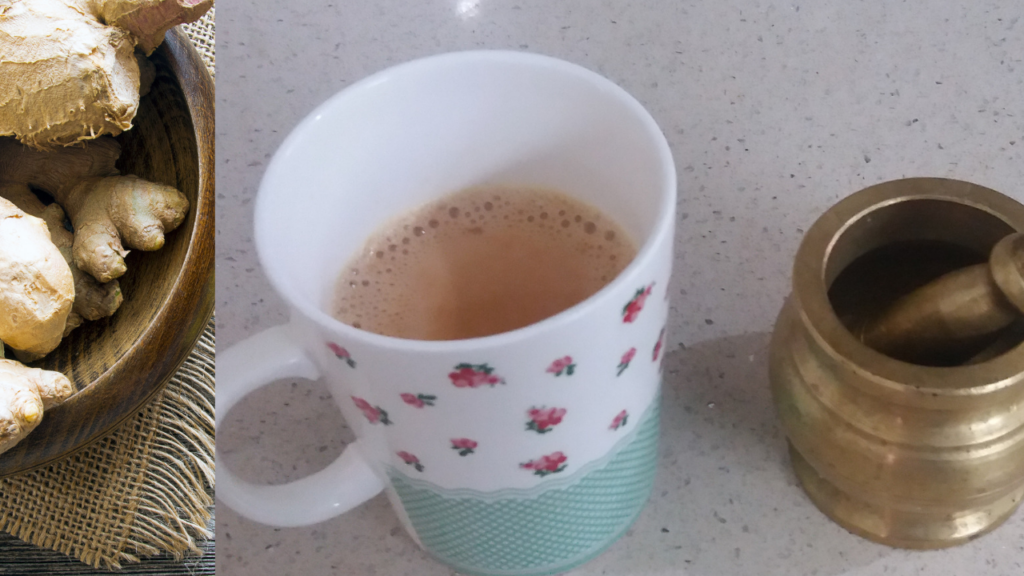
- tea
- ale

What does Ginger do to our body?
The volatile essential oils have anti bacterial and anti fungal activity .They also have bronchodilator effect and help in easing airway during respiratory illness.
In addition to this, they have pain relieving, anti inflammatory and anti oedema properties.They help in controlling chemotherapy , pregnancy and travel induced nausea and vomiting.
The pungent essential oils evoke a warm sensation when consumed. These oils are called trigeminal compounds because they stimulate the trigeminal , glossopharyngeal and vagus nerves.
The nerves carry these hot sensations to the brain . And invoke feelings of pleasure, relaxation, warmth and comfort. This is how you become a Ginger chai addict!!
CAUTION
Any spice or condiment which stimulates or enhances digestion can irritate the gastrointestinal tract when used excessively.
Also , to avoid irritating the gastrointestinal tract, it should not be combined with spices having similar properties. Avoid eating in empty stomach. Combining with less irritating herbs and condiments like coriander also helps.
Science backed ginger benefits
Type 2 Diabetes mellitus
Type 2 Diabetes mellitus is the most common lifestyle disease associated with increased blood sugar level , blood cholesterol and insulin resistance . It is a metabolic disesse commonly occurring in obese individuals . It is a condition in which there is generalized inflammation and increased risk of developing cardiovascular and renal diseases. Many studies with ginger supplements (1000 milligram to 3 grams per day ) for 8 to 12 weeks showed a decrease in blood glucose levels, Hba1c level, blood cholesterol and inflammatory markers.
Arthritis
It is a debilitating inflammatory disease which can affect a single joint or multiple joints in our body. Arthritis leads to a compromised life due to pain, stiffness and swelling of the joints. It many cases it is progressive and results in immobility.
Inflammation is the hallmark of this disease. Both osteoarthritis (old age and obesity) and rheumatoid arthritis (autoimmune disease) require anti-inflammatory, analgesic medication for controlling pain and swelling for a prolonged period. The commonly prescribed anti-inflammatory medications, if taken for a long time can lead to gastrointestinal side effects such as ulcer, bleeding and can damage liver and the kidneys .
Ginger being a potent anti-inflammatory can control inflammation. It inhibits cyclo oxygenase 2 pathway and reduces the formation of prostaglandin E2, a potential mediator of pain and inflammation.
In a 2012 study , a 4 week supplementation with ginger reduced symptoms related to osteoarthritis and the patients did not develop any adverse effects like gastro esophageal reflex ,ulcer or abdominal discomfort.
Dysmenorrhea
Dysmenorrhea is pain in the lower back and lower abdomen during menstruation. When the pain is acute it can also lead to nausea , vomiting and diarrhoea . This can occur few days before menstruation or during menstruation. Since this occurs every month, it can compromise the productivity of women experiencing it. Studies suggest inflammatory mediators released from the shedding endometrial cells cause uterine contraction and pain.
Generally, mefenamic acid is prescribed as an over the counter medication for dysmenorrhea. Many studies have concluded that taking ginger (500mg – 1500 mg) a few days prior to menstruation and during menstruation effectively controlled pain , cramping and associated nausea and vomiting.
Traditionally low physical activity is advised during menstruation . Along with this, placing hot water bag wrapped in a towel where pain is felt and ginger may effectively control the symptoms of dysmenorrhea.
Respiratory illness
Both acute and chronic respiratory illness are characterized by inflammation of airways in the lungs . This leads to improper oxygen exchange and fluid buildup in lungs. Low levels of oxygen can lead to lower functioning of master organs like liver, kidney, brain and heart resulting in chronic fatigue.
In chronic lung diseases, the natural choice is using corticosteroids to reduce the inflammation . Long-term steroid therapy causes many side effects like lowering of immunity and developing resistance.
Studies show ginger supplementation reduced inflammatory cytokines and improved blood oxygen levels. It also improved quality of life due to reduced cough and ease in breathing . Lp
Neuroprotection
In a study done in rats, combining the essential oils of both ginger and turmeric offered neuroprotection. Interestingly both ginger and turmeric belong to the same family. Ginger and turmeric increase the levels of anti-inflammatory neurotransmitter acetylcholine in the brain thereby preventing the degeneration of brain cells.
Cancer
Many factors like unhealthy diet , lack of exercise, genetic tendency contribute to the occurrence of cancer. Studies suggest cancer can also occur due to chronic inflammation . Inflammation in our body is a normal and protective response to any toxic stimuli. But when the response is present for a long time without any stimuli, it creates havoc in our body . Ginger is a natural dietary supplement that decreases inflammation in the gut and reduces the subsequent risk of developing cancer.
Vomitting
Continuos vomitting during pregnancy can lead to severe nutritional deficiency. Many will be in a dilemma whether or not to take medication to prevent vomiting.The non-volatile oils shogaol and gingerol have an anti emetic effect.Ginger can be a good choice as many studies have proven its anti emetic property. It also works well for motion sickness , post operative and chemotherapy induced nausea and vomiting .
Conclusion
Ginger as a nutritional supplement has scientifically proven anti inflammatory, antioxidant,anti emetic and analgesic properties. It is available in capsules and easy to include in our diet. It is commonly available , inexpensive , well tolerated and safe for long term use with many beneficial effects.
Reference
(1) Kizhakkayil J, Sasikumar B. Diversity, characterization and utilization of ginger: a review. Plant Genetic Resources 2011 08;9(3):464-477.
(2) Watson RR, Zibadi S, editors. Nutritional Modulators of Pain in the Aging Population. San Diego: Elsevier Science & Technology; 2017.
(3)Parthasarathy V, Chempakam B, Zachariah T. Chemistry of Spices. Wallingford: CABI; 2008.
(4)Aggarwal BB, Kunnumakkara AB, editors. Molecular Targets And Therapeutic Uses Of Spices: Modern Uses For Ancient Medicine. Singapore: World Scientific Publishing Company; 2009.
(5)McDonald ST, Bolliet DA, Hayes JE, editors. Chemesthesis : Chemical Touch in Food and Eating. Hoboken: John Wiley & Sons, Incorporated; 2016.
(6)MohaddRosc, Zingiber essential oil, a review on its composition and bioactivity. Clinical Phytoscience 2019 12;5(1).
(7)Ayodele Jacob Akinyemi, Philip Adeyemi Adeniyi, “Effect of Essential Oils from Ginger (Zingiber officinale) and Turmeric (Curcuma longa) Rhizomes on Some Inflammatory Biomarkers in Cadmium Induced Neurotoxicity in Rats”, Journal of Toxicology, vol. 2018, Article ID 4109491, 7 pages, 2018. https://doi.org/10.1155/2018/4109491