You may think you have many skills relevant for your profession and how does it matter whether you write by hand or type and your handwriting is good or bad. Let’s find out!.
Is good handwriting not necessary in this digital era? Even during the non-digital era, Mahatma Gandhi thought so, too.
I do not know whence I got the notion that good handwriting was not a necessary part of education, but I retained it until I went to England. When later, especially in South Africa, I saw the beautiful handwriting of lawyers and young men born and educated in South Africa, I was ashamed of myself and repented of my neglect. I saw that bad handwriting should be regarded as a sign of an imperfect education.
Mahatma Gandhi
why is handwriting important?
Handwriting as a skill is not assessed separately in schools. But, you will be judged throughout life for your handwriting.
It is one skill that travels with you lifelong which reflects your creativity, personality and individuality.
Even unbiased teachers, tend to give better grades for good handwriting for these simple reasons: it is easy to read, does not stress their mind as bad handwriting does.
Reasons why a person’s hand writing is bad
A child may experience difficulties due to lack of fine motor control, lack of sensorimotor integration, lack of visual memory, and lower attention span.
They may occur due to developmental disorders. Most of these problems may be correctable when promptly addressed if the spectrum of the disorders is in the lower range.
Fundamental factors like sitting position, chair and desk height, writing instrument, environmental lighting and noise all matter.
When you sit to write, your feet should be flat on the floor, hip and lower back supported well. The thighs should be parallel to the floor, elbows slightly flexed and forearm placed on the table.
Is it worthwhile to make an effort to improve handwriting?
It is totally worth! A skill practised everyday results in millions of new neural connections. This phenomenon is called neuroplasticity.
Writing by hand activates many parts of your brain involved in fine motor control, memory, and attention. It helps in better understanding of concepts during learning and enhances composition writing skills.
Not only that, this will also produce a spill over effect. It means when we attempt to improve a skill in one area , it can influence other skills as well.
What happens when we write with our hand?
Sensory nerves take information from the sense organs to the brain. In the case of writing, the sense of touch, vision and proprioception (ability to discriminate position of body parts) are involved. If you are taking notes in a lecture class, your auditory pathway are involved , too.
These informations are collectively processed in the brain and motor planning is done. After the planning process, orders pass through motor nerves for execution. All these sensory motor integration occurs in great speed involving many areas of brain.
Moreover, more complex neural networks are formed due to the involvement of fine hand movements, coordination of visual and motor pathways, and kinesthetic feedback. All these do not occur when a person takes notes by pressing keyboard buttons.
In an EEG study, Eva Askvik et al compared brain activity during handwriting/ drawing and typing. Since, both handwriting and drawing are more complex tasks, as expected, the study showed the involvement of deeper areas like the hippocampus and limbic system and the parietal and occipital regions.
Practising handwriting every day, like any other motor task, can bring functional and structural reorganization of the brain.
How can adults improve the handwriting?
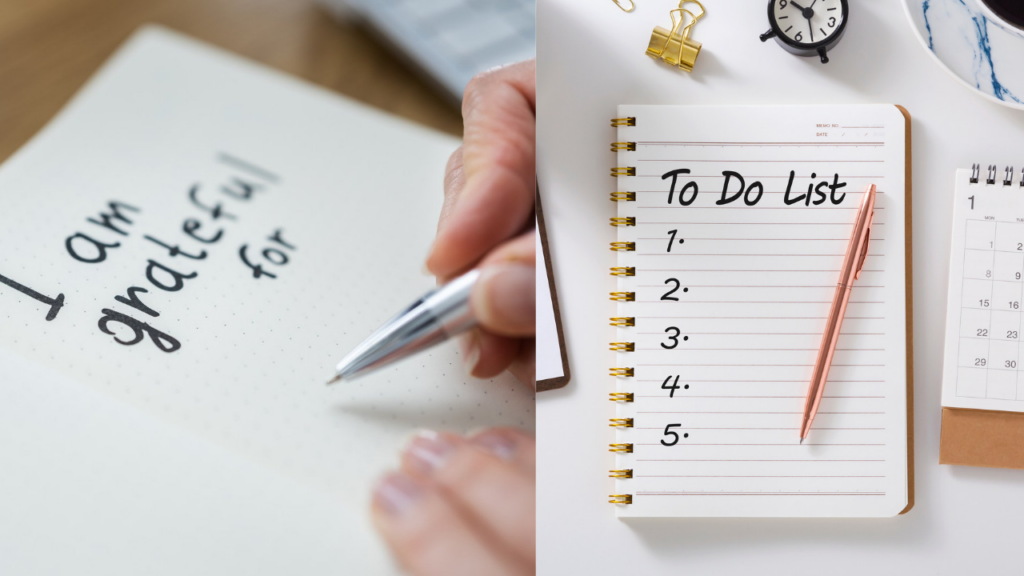
Now that journaling every day has become widespread, there is still scope to improve our handwriting. We can pen down thoughts while simultaneously improving our handwriting.
As an adult, when you improve your handwriting through mindful everyday practice, it can lead to self-appreciation. After all, who doesn’t like to look at their own beautiful handwriting everyday?
What if your handwriting is already beautiful?
There is still scope. One can try and improve the handwriting using the non-dominant hand. According to a study, deliberate practice using non-dominant hands (left hand for most of us) for as little as less < 200 minutes (spread over some time) significantly improves the quality of your non-dominant handwriting and dexterity of both hands.
It is because this practice increases the functional connectivity between both left and right sensorimotor areas and centre for manual praxis.
Manual praxis is the skilful use of hands for writing, playing instruments and using tools, etc. The centre for manual praxis is on the left side of the brain mostly. This is why most of us are right-handed.
Again, this can be practised by writing to-do lists and shopping lists in our non-dominant hands. In the beginning, your strokes will be jerky and the writing will be illegible. But, you will be surprised at the rate of improvement.
Take away
Let us write every day to improve what may be lacking in our handwriting like legibility, speed or esthetics and rewire our brain. Happy writing!
References
- Feder KP, Majnemer A. Handwriting development, competency, and intervention. Dev Med Child Neurol. 2007 Apr;49(4):312-7. doi: 10.1111/j.1469-8749.2007.00312.x. PMID: 17376144.
- James, K.. “The Importance of Handwriting Experience on the Development of the Literate Brain.” Current Directions in Psychological Science 26 (2017): 502 – 508.doi.org/10.1177/0963721417709821
- Kroliczak, Gregory & Buchwald, Mikołaj & Kleka, Paweł & Klichowski, Michal & Potok, Weronika & Nowik, Agnieszka & Randerath, Jennifer & Piper, Brian. (2021). Manual praxis and language-production networks, and their links to handedness.https://doi.org/10.1016/j.cortex.2021.03.022