The pandemic Covid-19 has brought more awareness towards our immune status. Vitamin D is now gaining more attention than Vitamin C and zinc. Let’s see why correcting vitamin D deficiency is the most relevant action to do now!
Vitamin D deficiency is prevalent in more than half the world population. It’s role in our health is much more than bone mineralization and calcium homeostasis. It is in fact a steroid hormone.
Now, we know that vitamin D receptors are present in all the organ systems in our body, influencing more than 200 genes.
Skin is the major source of vitamin D in our body as our dietary intake is mostly insufficient. When ultraviolet B rays of the sun fall on our skin, 7 dehydro cholesterol present in our skin is converted to pre vitamin D3.
The pre vitamin D3 formed in the skin has to be activated. First step of activation occurs in the liver where pre vitamin D3 is converted to 25(OH)Vit D3. The second and final activation occurs in kidneys where it is converted to 1,25 dihydroxy VitaminD3. This is the metabolically active hormone Vitamin D3.
The inactive form of vitamin D is stored and converted to active form in the immune cells also. Excess Vitamin D is stored in the fat tissue .
Vit D deficiency is linked to increased incidence of common cold and influenza. It is also linked with impaired lung function in asthma and COPD (chronic obstructive pulmonary disease).
Vitamin D and lung health
Our lungs are in continuous contact with the external environment through breathing. It s a very delicately designed organ to facilitate easy gas exchange.
It is constantly exposed to too many micro organisms and toxins. Despite this, the lungs are mostly healthy and inflammation free due to our immune system.
The lungs have their own highly specialised, self-reliant, and localised defence system. Many studies suggest that vitamin D orchestrates the immune system.
Innate immunity
It is the first line, non-specific defence mechanism that comes to play immediately when something suspicious is encountered.
Initially, the air we breath passes through filtering mechanism consisting of hair and mucus.The mucus, not only physically traps the microorganisms, it also produces antimicrobial agents.
The nasal mucus membrane effectively filters particles more than 2 microns in size. Since Covid-19 virus is much smaller, (50 -140 nanometres) it easily enters the lungs.
There are three main players for innate immunity of the lungs.
- Alveolar epithelium
- Macrophages
- Dendritic cells
Alveolar epithelium
These lining cells of the air sacs form a physical barrier. This layer is the immediate target of viruses. These cells are delicate but are the master regulators of immunity.
Maintenance of physical barrier
Alveolar cells contain Vitamin D receptor and enzyme which converts inactive vitamin to active form. Vitamin D maintains tight junction between the cells by expressing proteins like occludin, claudin, catenin, etc.
In SARS Covid-19, the alveolar epithelium is disrupted due to excess inflammation leading to influx of protein rich fluid and blood into the air space.
The ground glass opacity in the CT scans of COVID-19 patients is due to fluid collected in the lung alveoli .The fluid collection hinders air exchange resulting in oxygen deprivation. Additionally, this may result in complications such as secondary bacterial infection.
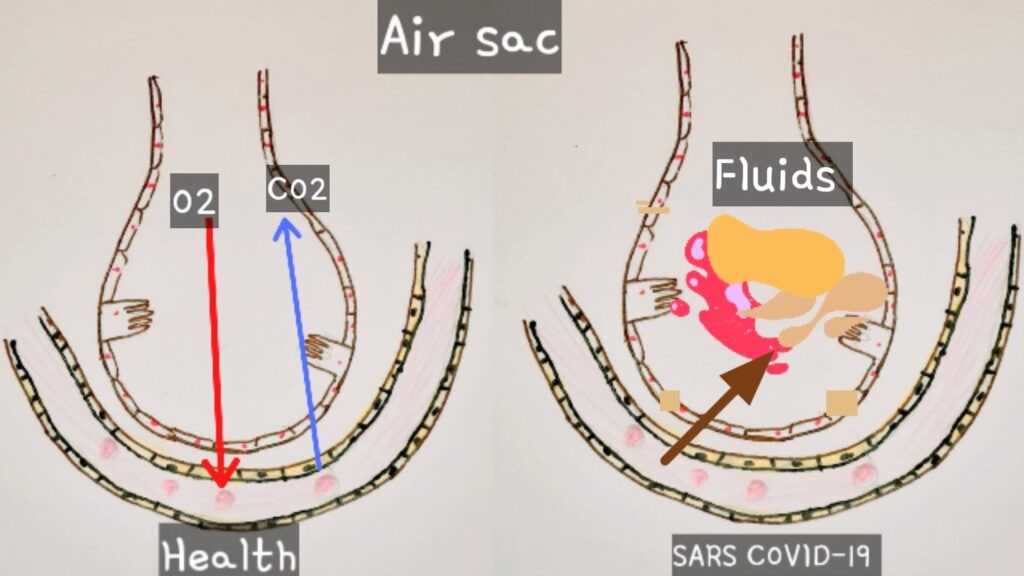
Immediate repair should happen to avoid further damage. This does not happen when the patient is deficient in Vitamin D.
Adequate vitamin D level decreases inflammation and permeability of fluids due to the maintenance of tight Junction.
Vitamin D is also responsible for wound healing and proliferation of alveolar epithelial cells. In a deficiency state, the rate of alveolar cell formation decreases. Instead, fibrous tissue forms between the cells and there is fibrosis of the lungs. When this occurs, patient may experience difficulty in breathing for a long time or even permanently.
Cathelicidin
Cathelicidins are antimicrobial peptides containing 23 to 80 amino acids. They kill the virus by destroying their outer membranes.These protein molecules reduce the viral load. Vitamin D activates the gene that expresses cathelicidin.
When an infection occurs, these molecules kill microbes, modulate the inflammatory response and promote wound healing.
Beta Defensin
Defensins are also antimicrobial peptides expressed by the alveolar cells.They act against bacteria, fungus and virus. Hence, they are called broad-spectrum antimicrobial peptides.They recruit inflammatory cells initially to the site of infection and also have anti inflammatory property to promote healing.
Macrophages
Macrophages are cells that recognize and engulf the virus. They also send signals to the adaptive immune system to control the situation more effectively.
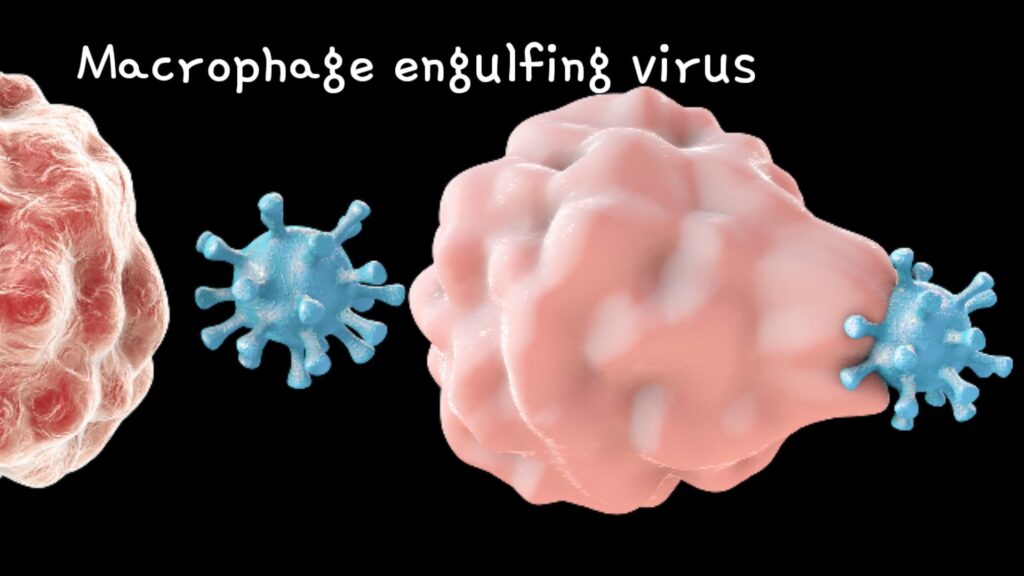
Like the alveolar epithelial cells, lung macrophages also contain inactive form of Vitamin D and the enzyme which activates vitamin D during infection.
Dendritic cells
These cells are intermediary between innate immune system and adaptive immune system. They digest the viral proteins and break them down into to smaller peptide .
Dendritic cells attach these peptides on themselves and carry the information to the adaptive information immune system for processing.
Vitamin D tries to control the infection with the innate immune system. So it downregulates the activities of dendritic cells to control further inflammation.Vitamin D induces IL-10 production and inhibits release of pro-inflammatory cytokines including TNF-α, IFN-γ and IL-1.
But, when the situation gets out of hand and innate immune system is not able to handle any further,the adaptive immune system takes over.
Adaptive immunity
Adaptive immunity, in otherwords called as acquired immunity, is more effective, virus-specific and lasts for a longer time .The main players of adaptive immunity are the lymphocytes – T lymphocytes and B lymphocytes.
There are many subgroups of T lymphocytes like the memory cells, helper cells, natural killer cells and regulatory cells. B lymphocytes produce antibodies against the virus.
Acquired immunity takes some time to establish (6 – 7 days). In the meanwhile, inflammation should not get out of control. Vitamin D is the main player during this time as well.
Vitamin D deficiency does not allow innate immunity to work efficiently. Consequently, when it is time for adaptive immunity to take over, there is an increased viral load. It immediately senses the emergency situation and opens fire!
This results in cytokine storm or severe immune response. This causes more damage to our cells than it does to the virus!
The serious symptoms of SARS COVID-19 is mainly due to hyper reaction of the immune system. Immune cells release chemicals to control the infection. But, too many pro inflammatory cytokines can increase inflammation. This starts destroying the lungs cells leading to acute respiratory distress syndrome.
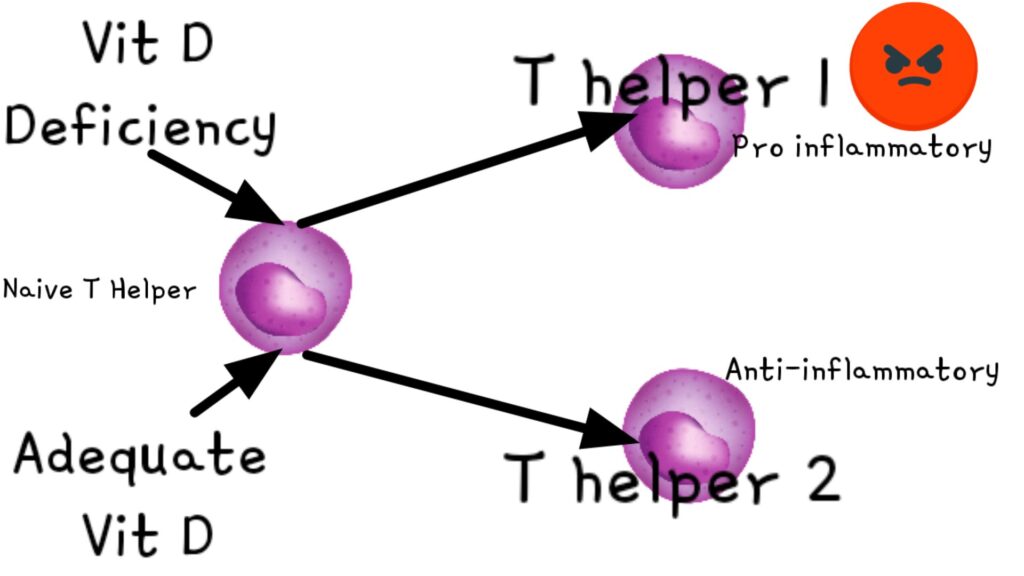
Vitamin D plays a main role in deciding whether the course of disease is going to take proinflammatory or anti inflammatory route.The T helper cells, a subtype of lymphocytes, can either take the form of T helper1( TH1) or T helper 2 (TH2) cells. TH2 cells are anti inflammatory and control the inflammation. And vitamin D mediates this pathway.
Renin angiotensin system RAS
The RAS is an endocrine system which maintains fluid balance and regulates blood pressure. Long term Vitamin D deficiency deregulates RAS.
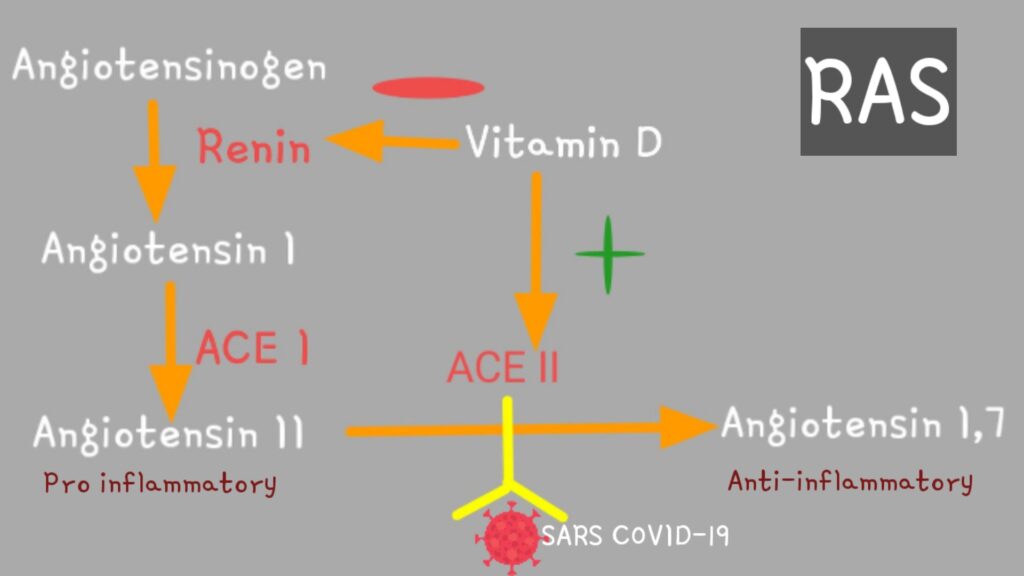
The end product of the system, angiotensin II is a pro-inflammatory molecule which increases blood pressure, oxidative stress, fibrosis and thrombosis.
Vitamin D inhibits renin expression and keeps Angiotensin II expression under control. It also increases ACE II expression which converts pro-inflammatory Angiotensin II to anti-inflammatory angiotensin (1,7).
The spikes on SARS COVID-19 contain proteins.This spike protein binds with ACE2 receptor to gain entry into the lung cells. Once it enters, it starts multiplying exponentially.
Vitamin D deficiency and binding of Covid virus to ACE2 receptors result in over expression and accumulation of angiotensin II. This leads to pulmonary hypertension, extreme inflammation, and oxidative stress resulting in acute lung injury. Additionally, there is multi organ damage wherever ACE 2 receptors are present like liver, intestine, blood vessels and heart.
Takeaway
Whether Vitamin D prevents Covid-19 infection or decreases the mortality in Covid-19 patients is still debatable. But numerous studies have proven the importance of Vitamin D in lung health.
A significant number of randomized controlled trials have proven that vitamin D reduces the severity of covid-19 infection . And many studies have also confirmed the correlation of vitamin D deficiency and increased death rate in COVID 19 patients.
Considering the role vitamin D plays in our immune health, it is definitely worthwhile to increase our vitamin D levels.
References
- Malaguarnera L. Vitamin D3 as Potential Treatment Adjuncts for COVID-19. Nutrients. 2020 Nov 14;12(11):3512. doi: 10.3390/nu12113512. PMID: 33202670; PMCID: PMC7697253.
- Hansdottir S, Monick MM. Vitamin D effects on lung immunity and respiratory diseases. Vitam Horm. 2011;86:217-37. doi: 10.1016/B978-0-12-386960-9.00009-5. PMID: 21419273; PMCID: PMC3559187.
- Bilezikian, J. P., Bikle, D., Hewison, M., Lazaretti-Castro, M., Formenti, A. M., Gupta, A., Madhavan, M. V., Nair, N., Babalyan, V., Hutchings, N., Napoli, N., Accili, D., Binkley, N., Landry, D. W., & Giustina, A. (2020). MECHANISMS IN ENDOCRINOLOGY: Vitamin D and COVID-19, European Journal of Endocrinology, 183(5), R133-R147.